
The Jewish/Diamond Connection
- Max Cardozo
- Jul 16, 2021
- 11 min read
Updated: Jul 17, 2021
The author traveled through the United States, Canada, Asia, Europe while his family life was going downhill, and retired in Costa Rica, Central America, at which point he decided to lead a simple life in a place where everything moved at a slower pace.

Resurging some seven centuries later, he decided to share this with all of you. Like how many spend their free time, he is writing about his memories, and about the good and bad of his birthplace, parents and great grandparents.
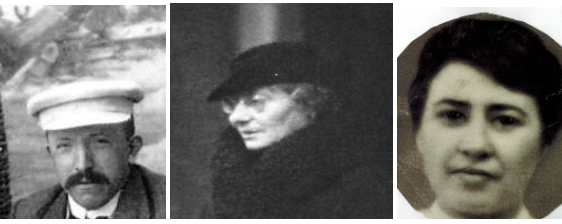
Betje Cardozo Krijn
Born 22 Nov 1881. Murdered at Kamp Auschwitz on December 4, 1942
Ebenezer Gompers
Murdered at Kamp Sobibor on October 4, 1943
Rebecca Zahran Gompers
Murdered at Kamp Sobibor on October 4, 1943
Philip Gompers
Philip Gompers married in 1938. Murdered at Kamp Sobibor on October 4, 1943

Started to write about somewhere in the middle. Holland is a region in the West of the Netherlands, now divided into North Holland and South Holland. These two provinces however, are not relatively equal to the area of Holland. However, or "woodland" was then called the Old Dutch Holland. The 12 provinces together make up what today we call the Netherlands. The official name of the country is the Kingdom of the Netherlands. Holland only means the two provinces of North-Holland and Zuid-Holland. However, the name Holland is often used when all the Netherlands is indicated.
There is perhaps no other ethnic group that is so inextricably intertwined with the diamond trade than the Jews. In an odd twist of fate, it may be Portuguese explorer Vasco da Gama's discovery of a sea route to India around Africa's Cape of Good Hope in 1488 that set the stage for the Jewish/diamond connection.
With Lisbon now at the forefront of the European diamond trade, many Portuguese Sephardi business people opened cutting houses and quickly gained a dominant role in the diamond-polishing industry.
The Sephardi were Jews from Spain and Portugal (the Iberian Peninsula), many practicing a secret adherence to Judaism known as "Crypto-Judaism," while professing other faiths. Jews who practiced their religion in the open were expelled from Spain and Portugal when the Catholic Monarchs issued the "Alhambra Decree" in 1492 (1497 for Portugal), fleeing to Morocco, the Ottoman Empire, Antwerp, and Amsterdam.
When the first Jewish emigrants (Ashkenazi) came to Antwerp in the 1200s, they were welcomed, but when the Black Plague swept across Antwerp in the mid-1300s, the Jews were one of the scapegoats. Although Amsterdam's Dutch were relatively tolerant when it came to religious freedom, in 1585, Antwerp came under Spanish rule, and the Jews (this time Sephardic) were once again the focus of scrutiny. With the Spanish Inquisition in high gear, Jews were now persecuted for conducting trade with the Ottoman Empire or being 'pseudo-Christian.'
In the 1600s, wealthy Jewish diamond traders now living in the Netherlands financed the 'Dutch East India Company' and explored new trade routes to India. Still, the British were beginning to see opportunity in the diamond trade, creating new competition for the Jewish/Dutch. Before being granted 'civil equality' in 1796, Amsterdam's Jews were not allowed to join trade guilds, leaving the unregulated diamond industry one of the only means of employment. By the late 18th century, many of Amsterdam's Jews were working in the diamond trade. Many of these 'Sephardi refugees' had maintained connections with Portuguese traders who now had a monopoly on India's trade of raw diamonds.
By the early 1700s, India's mines were nearing exhaustion, but a discovery in Brazil helped reinvigorate the diamond trade. By this time, British naval superiority proved to be a great advantage, and the 'British East India Company' was born. The European center for the diamond trade began to move away from Amsterdam as Jewish traders set up London. The cut stones were sold to the nobility and royalty of Europe, using the Hofjude (Court Jews) as purchasing agents to select the stones from the London diamond merchants.
Hasidic Judaism was founded by Polish (now Ukrainian) Rabbi 'Baal Shem Tov,' aka 'Israel ben Eliezer' (1698-1760) in a time when European Jews were facing increasing hostility and pressure from the "Cossacks' Uprising'' in Ukraine. The Hasidic movement is a sub-group of the theologically conservative Haredi or Charedi Judaism, aka Ultra-Orthodox Judaism. The movement was seen as a way of turning inward towards a 'deeper spiritualism and mysticism.'
Hasidism spread westward, making its way to western Europe in the 1800s. The Hasidic movement in Antwerp began with Rabbi Moshe of Pshevorsk, who authored 'Ohr Pnei Moshe' in 1805. The Pshevorsk is a slight sub-Hasidic movement based in Antwerp, Belgium, with their hub at the study hall (beth midrash), 'Beth Yitzchok' at Mercatorstraat 56.
With the discovery of vast diamond reserves in South Africa during the late 1800s, concern over a glut in the diamond market spread throughout London's diamond merchants. A group of wealthy Jewish dealers pooled their resources to form "the syndicate," which was created to soak up all of the excess capacity being developed by South Africa.
Today, Antwerp and London's diamond trade is primarily controlled by the Hasidic Jewish community, although Indian influence has risen in recent years. Many of these Hasidic entrepreneurs are nameless by choice, preferring to maintain their anonymity. Still, they have been the driving force behind the multi-billion dollar diamond industry for hundreds of years.
Between 1588 and 1795, the area currently representing the Netherlands was the Republic of Seven United Netherlands. The republic was conquered by French troops in 1795 and became the Batavian Republic. Napoleon appointed his brother Louis as King in 1806, turning the country into a kingdom. The Netherlands remained a kingdom after Napoleon's defeat. At that time, the area called "Holland" made the most significant contribution to the entire nation's economy and wealth.
Every country has its holidays. The most famous holidays in Holland are Sinterklaas and King's Day. Sinterklaas is celebrated in December, with children receiving presents when they have been 'good.' King's Day is when the Dutch celebrate their King's birthday. It is a national holiday celebrated mainly in the streets with many music acts and draws many tourists every year.
Most histories of the Jews in the Netherlands were generated between the end of the 16th century and World War II. The area now known as the Netherlands was once part of the Spanish Empire, but in 1581, the northern Dutch provinces declared independence. A principal motive was to practice Protestant Christianity, then forbidden under Spanish rule, so religious tolerance was effectively an important constitutional element of the newly independent state. That inevitably attracted the attention of Jews who were religiously oppressed in many parts of the world.
Between 1347 and 1351, Europe was hit by the plague or Black Death, leading to a new theme in medieval anti-Semitic rhetoric. The Jews were held responsible for the epidemic and for the way it was rapidly spreading because presumably, they were the ones who had poisoned the water of the springs used by the Christians. Various medieval chronicles mention this, e.g., those who wrote about how the Jews were murdered in the Brabant region and the city of Zwolle because they were accused of spreading the Black Death. This accusation was added to the other traditional blood libels against the Jews, such as piercing the Host used for communion and using Christian children as an offering during Passover. For this reason, local Jewish communities were often murdered in part or entirely or exiled. The Jews in Spain and Portugal turned toward the Dutch Republic as a new place of refuge.
Sepharadim, or Sephardic Jews sometimes referred to as Spanish and Portuguese Jews, originated from Spain and Portugal, but had been expelled or were forced to convert to Catholicism in the late 15th century. Many remained in the Iberian peninsula, practicing either their new religion in public and Judaism in secret or both Jews or Marranos). The newly independent and tolerant Dutch provinces provided more favorable conditions for observant Jews to openly establish a community and practice their religion. They migrated most notably to Amsterdam, and as they found themselves, collectively brought new trading expertise and connections to the city. Most importantly, they also received navigational knowledge from Portugal, which allowed the Netherlands to start competing for the Iberian overseas colonies.
After having been refused admission to Middelburg and Haarlem, these Anusim arrived in Amsterdam in 1593. Among them were prominent merchants and persons with in-demand skills. They labored assiduously in common cause with the people and contributed materially to the prosperity of the country. They became strenuous supporters of the House of Orange and were in return protected by the stadholder. During the Twelve Years' Truce, the commerce of the Dutch Republic increased considerably, and a period of development had arrived. That was particularly true for Amsterdam, where the Marranos moved their goods and base of operations to maintain their foreign trade relationships, including previous connections with the Levant and Morocco. The Emperor of Morocco had an ambassador at The Hague named Samuel Pallache, through whose mediation, in 1620, a commercial understanding was reached with the Barbary States.
The trade developed between the Dutch and Spanish South America was established particularly by these Spanish Jews. They also contributed to establishing the Dutch West Indies Company in 1621, and some of them sat on its directorate. The ambitious schemes of the Dutch for the conquest of Brazil were carried into effect through Francisco Ribeiro, a Portuguese captain, who is said to have had Jewish relations in Holland.
Some years later, the Dutch in Brazil appealed for more artisans of all kinds, and many Jews heeded the call. In 1642 about 600 Jews left Amsterdam distinguished scholars – Isaac Aboab da Fonseca and Moses Raphael de Aguilar. The Jews strongly supported the Dutch Republic in its struggle with Portugal for the possession of Brazil. Still, with its loss, they would seek refuge in other Dutch settlements, including the island of Curaçao in the Caribbean and New Amsterdam (Manhattan).
The Sephardic Jews of Amsterdam also established trade and commercial relationships with other countries in Europe. In the early 1620s, many of them would migrate from Holland to the Lower Elbe region. In a letter dated November 25, 1622, King Christian IV of Denmark invited Jews of Amsterdam to settle in Glückstadt, where, among other privileges, they were assured the free exercise of their religion.
Interior of the Amsterdam Esnoga, the synagogue for the Portuguese-Israelite (Sephardic) community, inaugurated August 2, 1675, is still being used by the Jewish community.
Besides merchants, many physicians were among the Spanish Jews in Amsterdam, including Samuel Abravanel, David Nieto, Elijah Montalto, and the Bueno family. Joseph Bueno was consulted in the illness of Prince Maurice in April 1623. Jews were admitted as students at the university, where they studied medicine as the only branch of science which was of practical use to them, for they were not permitted to practice law. The Christian oath compelled all professorships to exclude them. Neither were Jews taken into the trade guilds: a resolution passed by the city of Amsterdam in 1632 (the cities being autonomous) excluded them.
Exceptions, however, were made in the case of trades that stood in peculiar relations to their religion: printing, bookselling, the selling of meat, poultry, groceries, and drugs. In 1655 a Jew was, exceptionally, permitted to establish a sugar refinery. Several Sephardic Jews stood out during that time, including Menasseh Ben Israel, who corresponded widely with Christian leaders and helped promote Jewish resettlement in England. Another was Benedictus de Spinoza (Baruch Spinoza), who would be excommunicated from the Jewish community in 1656 after speaking out his ideas concerning (the nature of) God, later published in his famous work, Ethics.
The Ashkenazim
Over time, many of these German Jews attained prosperity through retail trading and diamond-cutting. The latter industry retained the monopoly until about 1870. When William IV was proclaimed stadholder (1747), the Jews found another protector like William III. He stood in very close relations with the head of the DePinto family, at whose villa, Tulpenburg, near Ouderkerk, he and his wife paid more than one visit. In 1748, when a French army was at the frontier, and the treasury was empty, De Pinto collected a large sum and presented it to the state. Van Hogendorp, the secretary of state, wrote to him: "You have saved the state." In 1750 De Pinto arranged to convert the national debt from a 4 to a 3% basis.
Under the government of William V, the country was troubled by internal dissensions; the Jews, however, remained loyal to him. As he entered the legislature on the Day of his majority, March 8, 1766, everywhere in the synagogues, Thanksgiving services were held. William V did not forget his Jewish subjects. On June 3, 1768, he visited both the German and the Portuguese synagogue; he attended the marriage of various prominent Jewish families.
The French Revolution and Napoleon
The year 1795 brought the French Revolution results to the Netherlands, including emancipation for the Jews. On September 2, 1796, the National Convention proclaimed this resolution: "No Jew shall be excluded from rights or advantages which are associated with citizenship in the Batavian Republic, and which he may desire to enjoy." Moses Moresco was appointed member of the municipality at Amsterdam; Moses Asser member of the court of justice there. At whose head stood the chief rabbi Jacob Moses Löwenstamm, the old conservatives were not desirous of emancipation rights. Indeed, these rights were a more significant part of doubtful advantage; their culture was not so far advanced that they could frequent ordinary society. Besides, this emancipation was offered to them by a party which had expelled their beloved Prince of Orange, to whose house they remained so faithful that the chief rabbi at The Hague, Saruco, was called the "Orange dominie." The men of the old régime were even called "Orange cattle."
Nevertheless, the Revolution appreciably ameliorated the condition of the Jews; in 1799, their congregations received, like the Christian congregations, grants from the treasury. In 1798 Jonas Daniel Meijer interceded with the French minister of foreign affairs on behalf of the Jews of Germany, and on August 22, 1802, the Dutch ambassador, Schimmelpenninck, delivered a note on the same subject to the French minister. From 1806 to 1810, the Kingdom of Holland was ruled by Louis Bonaparte, whose intention was to amend the condition of the Jews that their newly acquired rights would become of real value to them; the shortness of his reign. However, it prevented him from carrying out his plans. For example, after changing the market-day in some cities (Utrecht and Rotterdam) from Saturday to Monday, he abolished the "Oath More Judaico" in the courts of justice. He administered the same formula to both Christians and Jews. To accustom the latter to military services, he formed two battalions of 803 men and 60 officers, all Jews, who had been until then excluded from military service, even from the town guard.
The union of Ashkenazim and Sephardim intended by Louis Napoleon did not come about. He had desired to establish schools for Jewish children, who were excluded from the public schools; even the Maatschappij tot Nut van 't Algemeen, founded in 1784, did not willingly receive them or admit Jews as members. Among the distinguished Jews of this period were Meier Littwald Lehemon, Mozes Salomon Asser, Capadose, the physicians David Heilbron, Davids (who introduced vaccination), Stein van Laun (tellurium), and many others.
19th century and early 20th century
On November 30, 1813, William VI arrived at Scheveningen, and on December 11, he was solemnly crowned as King William I. Chief Rabbi Lehmans of The Hague organized an exceptional thanksgiving service and implored God's protection for the allied armies on January 5, 1814. Many Jews fought at Waterloo, where thirty-five Jewish officers died. William VI concerned himself with the organization of the Jewish congregations. On February 26, 1814, a law was promulgated abolishing the French régime. The Jews continued to prosper in the independent Netherlands throughout the 19th century.
By 1900, Amsterdam The Hague Rotterdam Jewish Newspaper, 1903, The total population of the Netherlands in 1900 was 5,104,137, about 2% of whom were Jews. In particular, the Netherlands and Amsterdam remained a significant Jewish population center until World War II, so much so that Amsterdam was called the Jerusalem of the West by its Jews. The latter part of the 19th century, as well as the first decades of the 20th century, saw an ever-expanding Jewish community in Amsterdam after Jews from the mediene (the "country" Jews, Jews who were living outside the big cities – like Amsterdam, Rotterdam and The Hague -, in numerous small congregations throughout the Dutch countryside) left their communities en masse, searching for a "better life" in the larger cities.
Boundaries between Gentiles and Jews started to blur due to the increase in Gentile-Jewish marriages and residential spreading, to cross due to a decrease in observance of religious practices like Sabbath and eating kosher food, and to shift as civic involvement and political participation increased.
The number of Jews in the Netherlands grew substantially from the early 19th century until World War II. Between 1830 and 1930, the Jewish presence in the Netherlands increased by almost 250%. In the Netherlands, the Dutch had lived in peace for 125 years, ever since they had joined the British in fighting Napoleon at the Battle of Waterloo. Like the Norwegian's, they had managed to stay neutral during the Great War, and until May 10, they had clung to the hope and belief that they could do so. In 1939, some 140,000 Dutch Jews were living in the Netherlands.
My story, a child underground


My success with two significant people my wife Lenore for over many years and my G-D every Friday night does the blessing for candle lighting, cover your eyes with your and recite the appropriate approval.
And by claiming—and demonstrating—that everyone is equal before G-D, they inspired their followers to “reach out in love —and without fear"—to all kinds of people.


Comments